
Free Enneagram Test
Discover the pattern behind how you think, feel and relate
Take the free DGL Enneagram Relationship Indicator and discover what drives your reactions, relationships and conflict.
What keeps happening in your relationships?
Perhaps you keep having the same argument, even though you both know how it ends. You might find yourself correcting the people you love, giving far more than you receive, measuring your worth by how successful or valued you appear, or feeling painfully misunderstood even by the person who knows you best.
Perhaps you withdraw when you feel overwhelmed, question whether you can really trust someone, or escape difficult feelings by staying busy and looking for what’s next. You might become forceful when you feel vulnerable, or keep the peace for so long that your own needs almost disappear.
Different behaviours. Different personalities. But underneath them are patterns — ways we’ve learned to protect ourselves, get our needs met and stay connected to the people who matter to us.
The Enneagram helps uncover what’s driving those patterns.
What will your free enneagram test tell you?
Your likely core Enneagram type
Your strongest supporting patterns
How your personality shifts under pressure
What you tend to need in close relationships
Where misunderstanding and defensiveness may begin
What is the Enneagram?
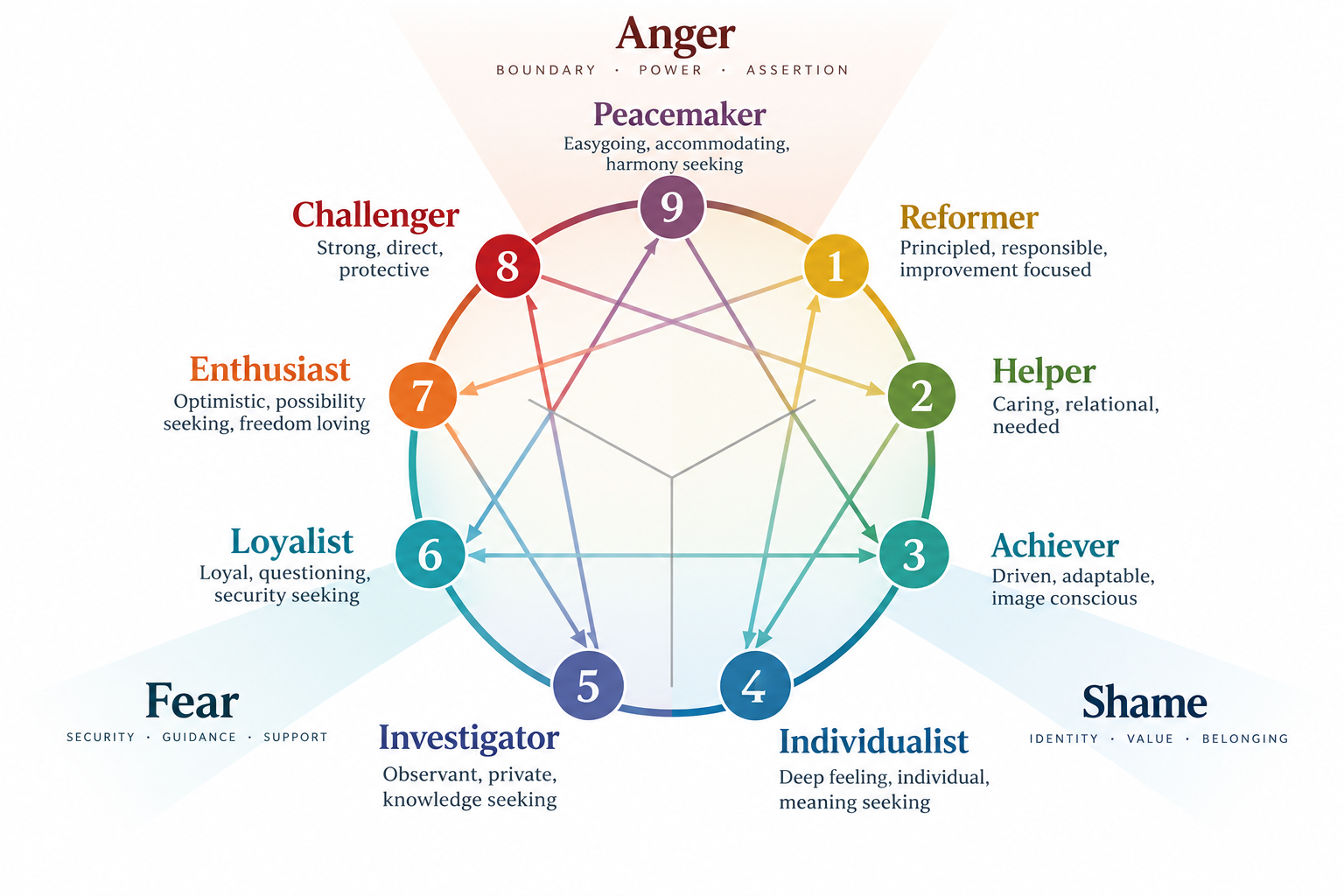
The Enneagram is a personality framework that explores the motivations, fears and needs behind how we think, feel and behave. Rather than simply describing what you do, it can help you understand why certain patterns keep appearing, particularly in relationships, conflict and under pressure.
There are nine Enneagram types, each describing a different underlying pattern. Your result isn't intended to put you in a box. Think of it as a strong hypothesis: something to explore with curiosity, honesty and perhaps the occasional uncomfortable laugh.
I’m Benjamin Leppier. My wife Kerry and I founded The Damn Good Listener, and for more than ten years I’ve worked with individuals and couples to understand the patterns beneath arguments, disconnection and defensiveness.
I created the DGL Enneagram test to do more than give you a type number. It helps you explore the pattern you bring into close relationships, particularly what happens when you feel hurt, misunderstood, threatened or under pressure.

What do you get with the free Enneagram test?
Your free personalised results are emailed to you as soon as you complete the test. You'll receive:
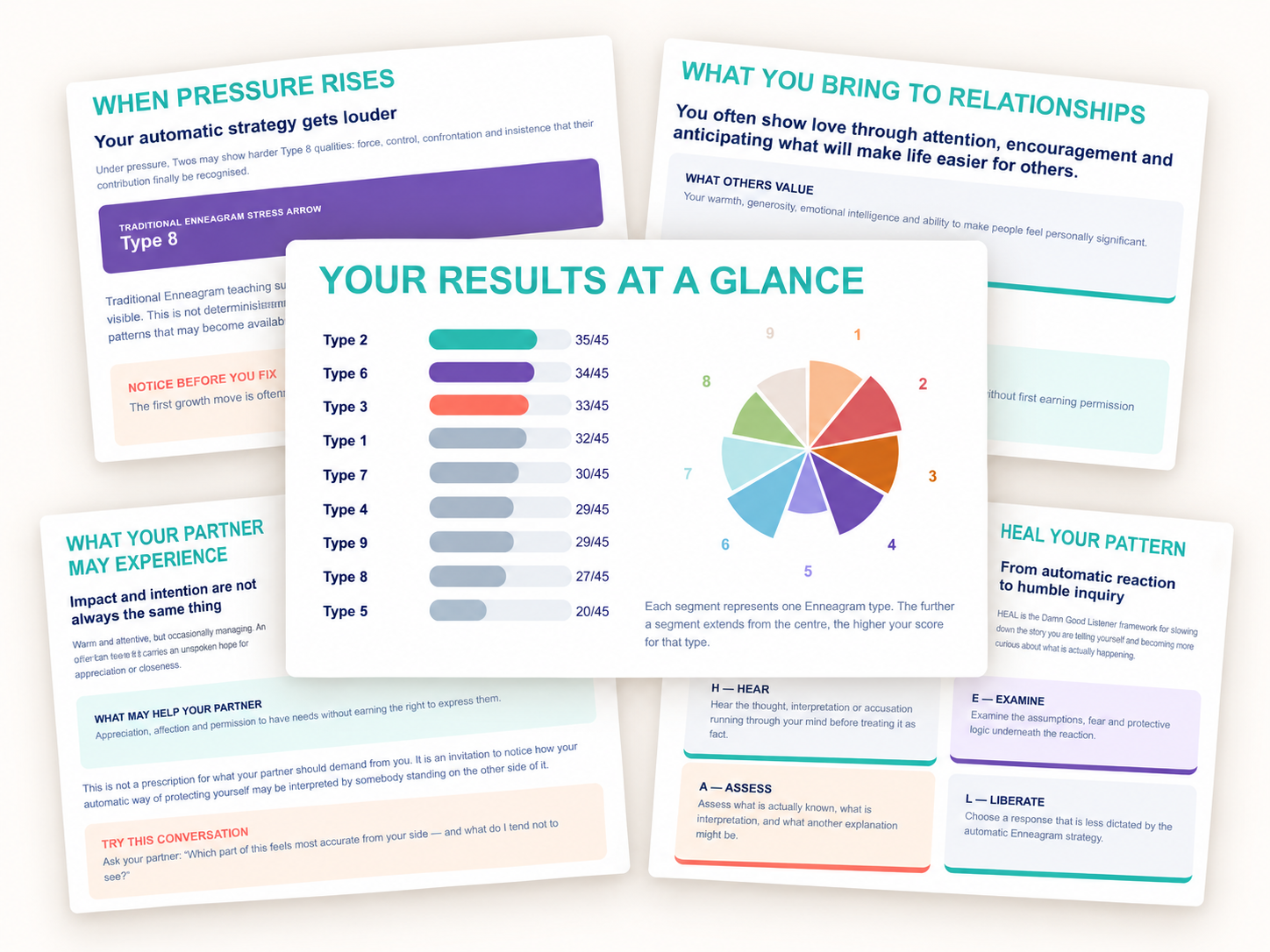
Your top three Enneagram type scores
Your scores across all nine Enneagram types
A visual chart showing your overall Enneagram pattern
A personalised introduction to your most likely type
Insight into what you tend to bring to relationships
Insight into what you may need from other people
Want to go deeper?
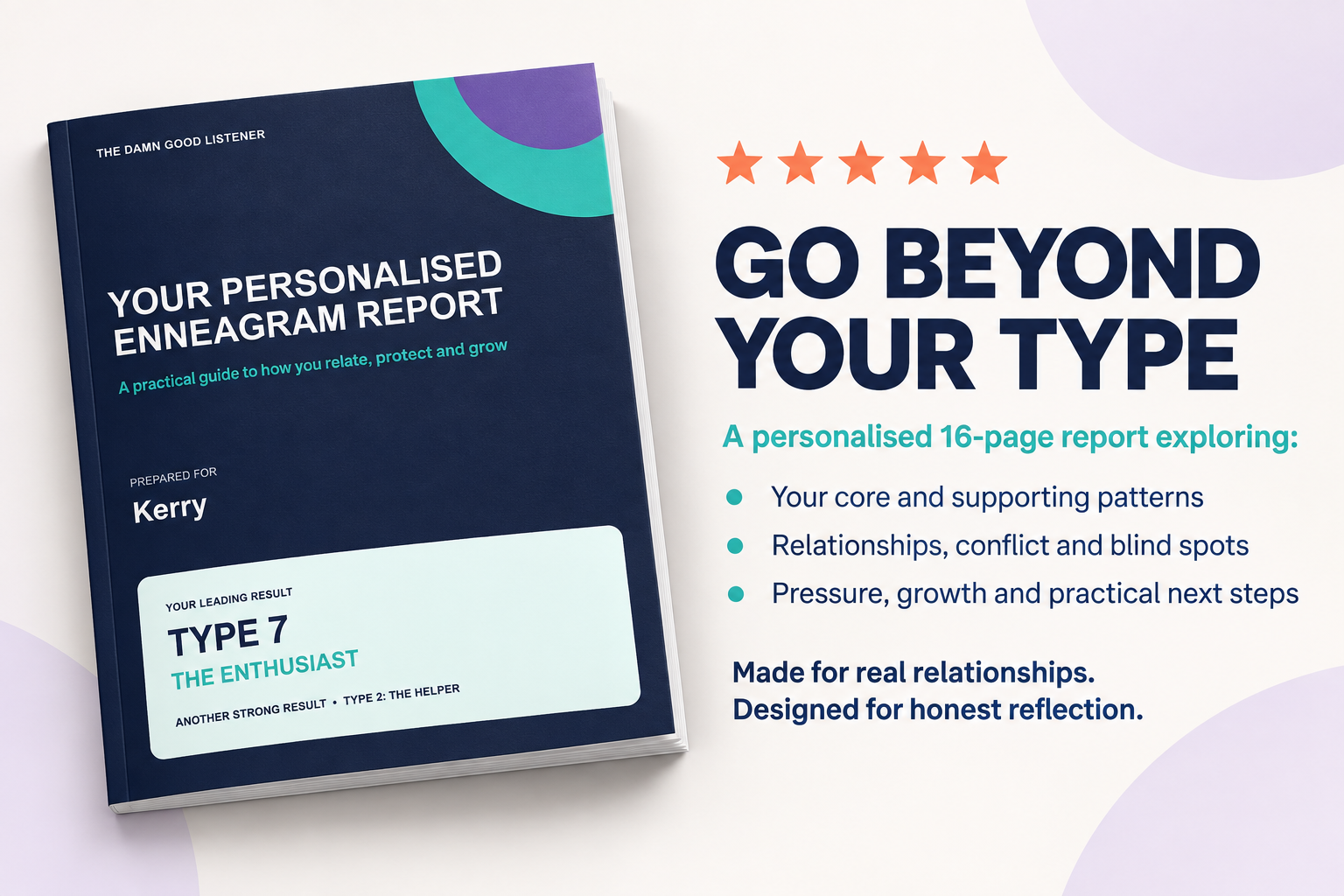
For £9.98, unlock your personalised 16-page DGL Enneagram Report: Designed to help you understand not just your type, but what your pattern looks like in relationships, conflict and under pressure.
Your primary and secondary patterns explored in depth
Your strengths and potential growth edges
How your pattern can change under stress
What happens when you feel misunderstood or defensive
Your relationship needs and recurring friction points
How different Enneagram types may experience you
Practical guidance for difficult conversations
Your personalised HEAL reflection framework
81 Questions • Approximately 10-12 Minutes • Free Personalised report delivered by email
The nine Enneagram personality types
The Enneagram describes nine different personality patterns. Each is shaped by a different underlying motivation — and each can create its own strengths, needs and difficulties in relationships:
Type 1 — The Principled Improver
You may value doing things properly and struggle when others don't meet the same standards. In relationships, frustration can turn into criticism or correction — even when what you really want is for things to be better.
Type 2 — The Supportive Connector
You may naturally notice what other people need and give generously. The difficulty comes when your own needs go unspoken and giving starts to carry an expectation of love, appreciation or reciprocity.
Type 3 — The Adaptive Achiever
You may work hard to be capable, successful and valued. In close relationships, it can become difficult to separate who you really are from the person you believe you need to be to remain admired or worthwhile.
Type 4 — The Insightful Individualist
You may long to be deeply known and understood. When connection feels shallow or something important seems missing, disappointment and emotional intensity can make closeness harder rather than easier.
Type 5 — The Observant Specialist
You may protect your time, energy and inner world carefully. When relationships feel demanding or emotionally overwhelming, withdrawing can provide relief — while leaving the other person feeling shut out.
Type 6 — The Loyal Questioner
You may value loyalty, security and knowing where you stand. When certainty disappears, questioning, anticipating problems or testing another person's reliability can unintentionally create the insecurity you're trying to prevent.
Type 7 — The Enthusiastic Optimist
You may naturally look towards possibility, freedom and what's next. When relationships become painful or restrictive, staying positive or moving quickly to solutions can make it difficult to remain present with uncomfortable feelings.
Type 8 — The Protective Challenger
You may value strength, honesty and independence. When you sense vulnerability, injustice or loss of control, intensity can become protection — but other people may experience that protection as confrontation or dominance.
Type 9 — The Steady Harmoniser
You may instinctively preserve peace and accommodate other people's priorities. Over time, your own wants can disappear from view until withdrawal, stubbornness or resentment becomes the only way they get expressed.
None of these descriptions determines your type. The DGL Enneagram Test looks across all nine patterns to help identify which motivations appear strongest for you.
Frequently asked questions about the Enneagram test
Is this Enneagram test free?
Yes. You can complete all 81 questions and receive your personalised results by email for free. If you want to explore your results more deeply, you can choose to purchase the 16-page personalised DGL Enneagram Report for £9.98.
How long does the Enneagram test take?
Most people complete the 81 questions in approximately 10–12 minutes. Try to answer according to what is generally true of you rather than how you think you should respond.
What will my Enneagram test results tell me?
Your free results show your scores across all nine Enneagram types, your three strongest patterns and an introduction to your most likely type. They also begin exploring what you tend to bring to relationships and what you may need from other people.
How accurate is an Enneagram test?
No personality test can tell you definitively who you are. Your result is best treated as a strong hypothesis rather than a verdict. Look for the underlying motivations you recognise in yourself, not simply behaviours that sound familiar.
Can I use the Enneagram test for my relationship?
Yes. The DGL test has been designed with relationships particularly in mind. Your results explore patterns that can become important in closeness, conflict, misunderstanding and under pressure. Each partner can take the test separately and compare what they discover.
What are the nine Enneagram types?
The Enneagram describes nine core personality patterns, conventionally numbered Type 1 through Type 9. Each is associated with different motivations, fears, needs and ways of responding to other people. You can read a short description of all nine types above before taking the test.